Forex Trading for Beginners in 2026
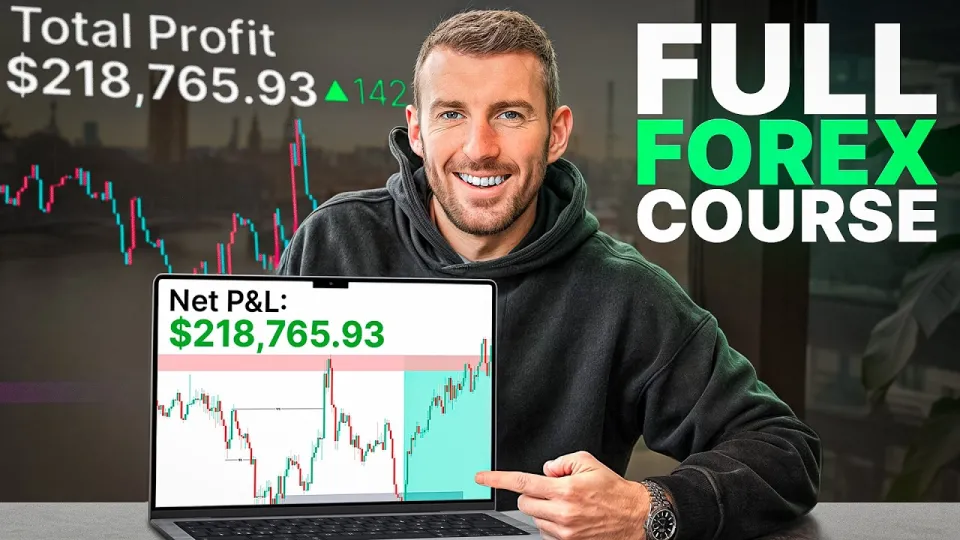
Video: Beginners Guide To Forex Trading In 2026 (+3 hours)
You can order the same kind of articles for your own video to boost it on YouTube and Google. Just message the Telegram bot @sat_sit_bot. It writes articles around your video, embeds the video and publishes them on popular niche websites (no ads). Your first 50 articles are free.
· based on the channel Matt Donlevey - Photon Trading
Key takeaways
- Forex is the world's largest financial market with ~$7.5 trillion daily volume.
- A structured course like Matt Donlevey's 3-hour guide covers market dynamics, strategy, and psychology.
- Understanding bid/ask spread, order flow, and auction market theory is essential for real trading.
- Risk management and trading psychology determine long-term success more than entry signals.
- Free resources like the Photon Trading course offer a solid starting point without cost.
Forex trading for beginners in 2026 is best learned through a structured, step-by-step course that explains market mechanics, risk management, and psychology—not through random YouTube clips. A complete guide like Matt Donlevey's "Beginners Guide To Forex Trading In 2026 (+3 hours)" provides a systematic framework that you can apply immediately. For a free companion course and cheatsheets, visit Photon Trading's free training.
Why Forex Trading for Beginners Needs a Structured Approach
Forex trading for beginners often fails because most free content focuses on chart patterns without explaining why price moves. Matt Donlevey argues that technical analysis alone gets a bad reputation—geometric shapes don't explain market dynamics. Instead, you need to understand the true underlying market forces: order flow, liquidity, and auction market theory. A structured course builds this foundation before jumping to strategies.
The video spans over three hours and covers everything from "What Is Forex Trading?" to "Trading Psychology," with clear timestamps so you can revisit specific topics. Unlike dopamine-driven montages that make you feel productive without teaching actionable skills, this guide is designed for real application.
Core Concepts Every Beginner Must Grasp
Before placing a trade, you must understand how the forex market actually operates. The video breaks down market microstructure, including bid, ask, and spread—the costs that directly affect your profitability. It also explains the orderbook and order flow, showing how large players move price through liquidity zones.
Key concepts include:
- Market dynamics: The forces of supply and demand that drive price, not just chart patterns.
- Auction market theory: How price seeks areas of liquidity and fair value.
- Market structure: Identifying trends, ranges, and reversals across multiple timeframes.
- Premium and discount: Knowing when price is overextended or undervalued relative to a range.
- Liquidity concepts: How stop hunts and liquidity pools create trading opportunities.
These ideas form the backbone of the Photon Strategy, which is introduced later in the course.
Building a Trading Strategy That Works
The Photon Strategy is a systematic approach built on market dynamics, not arbitrary indicators. It starts with market structure analysis, then incorporates multi-timeframe analysis to align higher-timeframe bias with lower-timeframe entries. Supply and demand zones help identify high-probability areas for reversals or continuations.
The strategy also covers trade entries, trade management, and money management. You'll learn how to set stop-losses, take profits, and size positions correctly. The course emphasizes that a strategy is only as good as its risk management—without proper money management, even a winning system can blow up an account.
Risk Management and Trading Psychology
Many beginners focus solely on entry signals, but the video stresses that money management and psychology are equally important. It covers three common mistakes that traders make and how to avoid them. Creating a trade plan, backtesting, and journaling are presented as non-negotiable habits for consistent results.
Trading psychology is addressed in depth: mastering the strategy first builds confidence, which then helps you handle the emotional ups and downs of live trading. As one viewer noted, "Master the strategy first, once you've built an edge, you move to the psychological part." The course also explains how to choose a broker, understand trading costs, and execute trades efficiently.
Common Questions and Concerns from Beginners
Viewers of the video raised several practical questions. One common concern is the pace of the course—some found it fast, especially non-native English speakers. However, the timestamps allow you to pause and rewatch sections. Another frequent question is whether such a comprehensive guide is truly free; indeed, the full 3-hour video is available at no cost, with an optional free course and cheatsheets via the Photon Trading website.
Many wonder about the profitability of forex trading. The video addresses "How Much Money Can You Make Trading Forex" and "How To Trade Other People's Money," providing realistic expectations rather than get-rich-quick promises. Others ask about the best broker or how to start with a small account; the course covers broker selection and trading costs, emphasizing regulation and spread. Finally, viewers often ask about the difference between SMC (Smart Money Concepts) and traditional technical analysis—the course explains that SMC focuses on liquidity and institutional order flow, which is more grounded in market reality.
Useful Resources
- Free Photon Trading Course + Cheatsheets
- Photon Mentorship Program
- Free Telegram Channel
- Instagram: @photontrading
Final Thoughts
A structured forex education is the difference between gambling and trading. Matt Donlevey's 3-hour beginner guide consolidates market dynamics, strategy development, risk management, and psychology into one cohesive resource—something you'd typically pay for. Whether you're starting fresh or revisiting the basics, this course provides a clear path. For a free companion course and cheatsheets, visit Photon Trading's free training and take the next step in your trading journey.
Source: Beginners Guide To Forex Trading In 2026 (+3 hours) · Markdown version
Questions & answers
Is forex trading suitable for beginners with no experience?
Yes, but only with proper education. Beginners should start with a structured course that covers market mechanics, risk management, and psychology. Avoid live trading until you've backtested a strategy and understand concepts like bid/ask spread and order flow.
How much money can I make trading forex?
Profitability depends on your edge, risk management, and capital. Realistic returns for skilled traders range from 5% to 20% annually, but many beginners lose money. The video addresses this with honest expectations and emphasizes that trading other people's money requires proven results.
What is the best broker for forex trading?
Choose a regulated broker with low spreads, reliable execution, and a platform that suits your style. The course covers broker selection criteria, including trading costs and execution quality. Always verify regulation before depositing funds.
Do I need to understand technical analysis to trade forex?
Technical analysis helps with entries and exits, but it's not enough alone. You must understand market dynamics—order flow, liquidity, and auction theory—to build a strategy based on real market logic. The Photon Strategy combines structure analysis with these deeper concepts.